

Good morning,
After 37 consecutive rainy days in Tokyo, we are in that delightful phase of autumn: cloudless skies, no wind, cool mornings, with very few bouts of sudden heat, as if to remind us of previous Octobers and make us grateful for the one we have.
If one could set aside the increasingly troubling real reasons behind this unusual weather pattern, I enjoyed this strange summer in Tokyo, where the rain disregarded its usual mid-July exit date and stayed with us, with a few short breaks, until early October.
After many gruelingly humid summers, it was nice not to have the entire summer structured around surviving the humidity and the daily commute to work, and to avoid developing that little grudge against this city that I otherwise adore and that deserves none of it.
I now hope the sunshine stays with us for a while to accompany the fall colors season, already at its peak in higher-altitude regions - the topic of last month’s letter that zigzagged the country to introduce some of my favorite foliage spots in chronological peak-foliage order.
This month’s letter, though, betrays the premise of this newsletter and takes a rare break from Japan for a land known for its glorious coastlines, sunny beaches, intimidating sharks (and crocodiles), and frequent sightings of gorgeous humpback whales during their migration season: Australia.
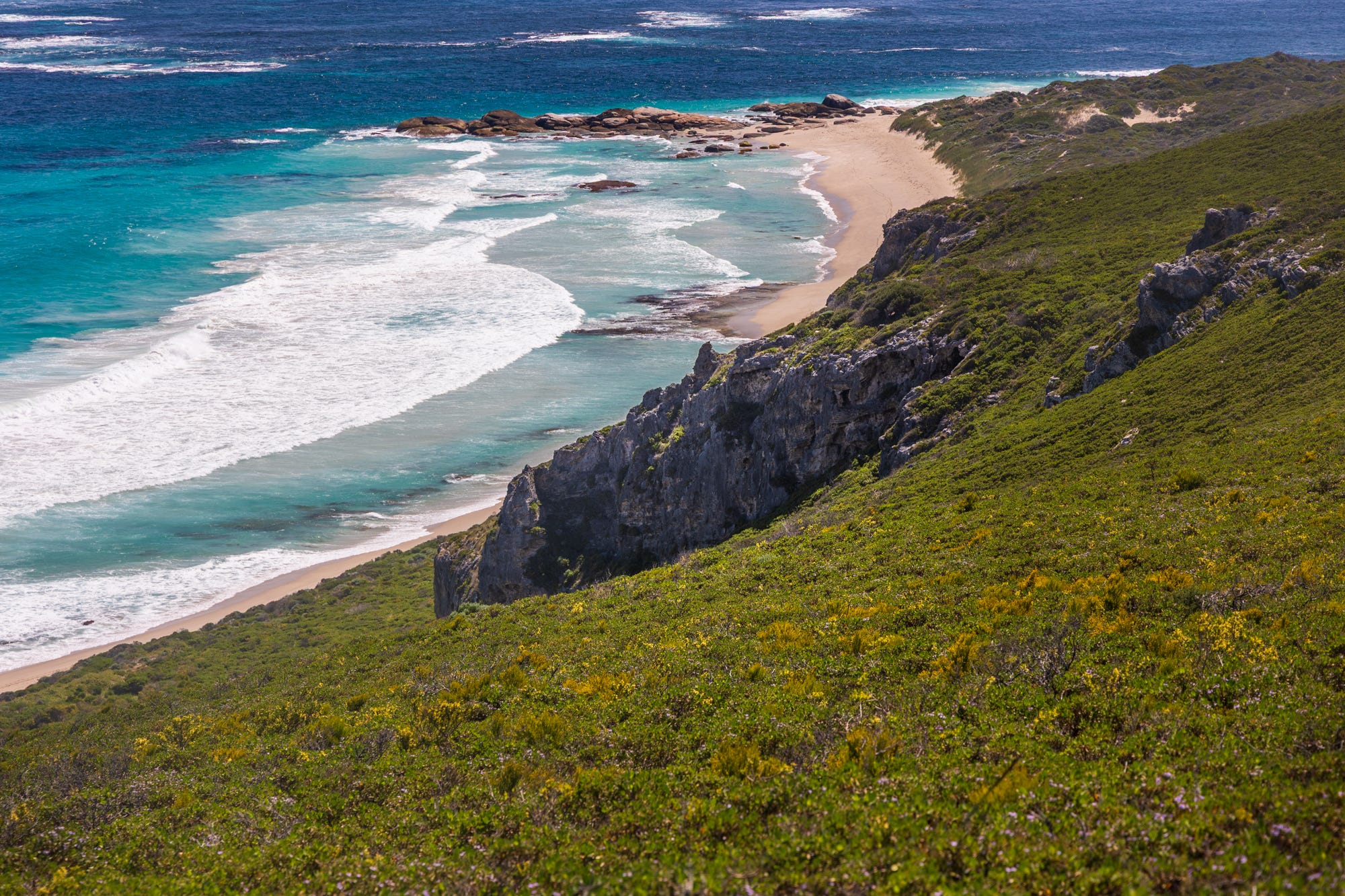
More specifically, Western Australia, where I spent a week in late September during the region's wildflower season to walk some sections1 of the Cape to Cape Trail, the 130-kilometer route that runs along the coast, connecting Cape Naturaliste in the north with Cape Leeuwin in the south.
After hiking the Great Ocean Walk in Victoria a few years earlier, another well-known Australian coastal hike that I always remember lovingly as the best hike of my life, I was looking for a similar experience in the country: a non-technical trail, with extensive coastal views, and a charming small town or two to base myself in during and after the hike.
And on the Cape to Cape Trail, I certainly found much more than I was looking for, in both wonderful and unexpectedly challenging ways.
Scenery-wise, the trail turned out to be much more beautiful than I expected. It made me grateful for that element of surprise, which somehow survived the pre-trip overexposure that came from browsing hundreds of photos and videos while planning the trip.
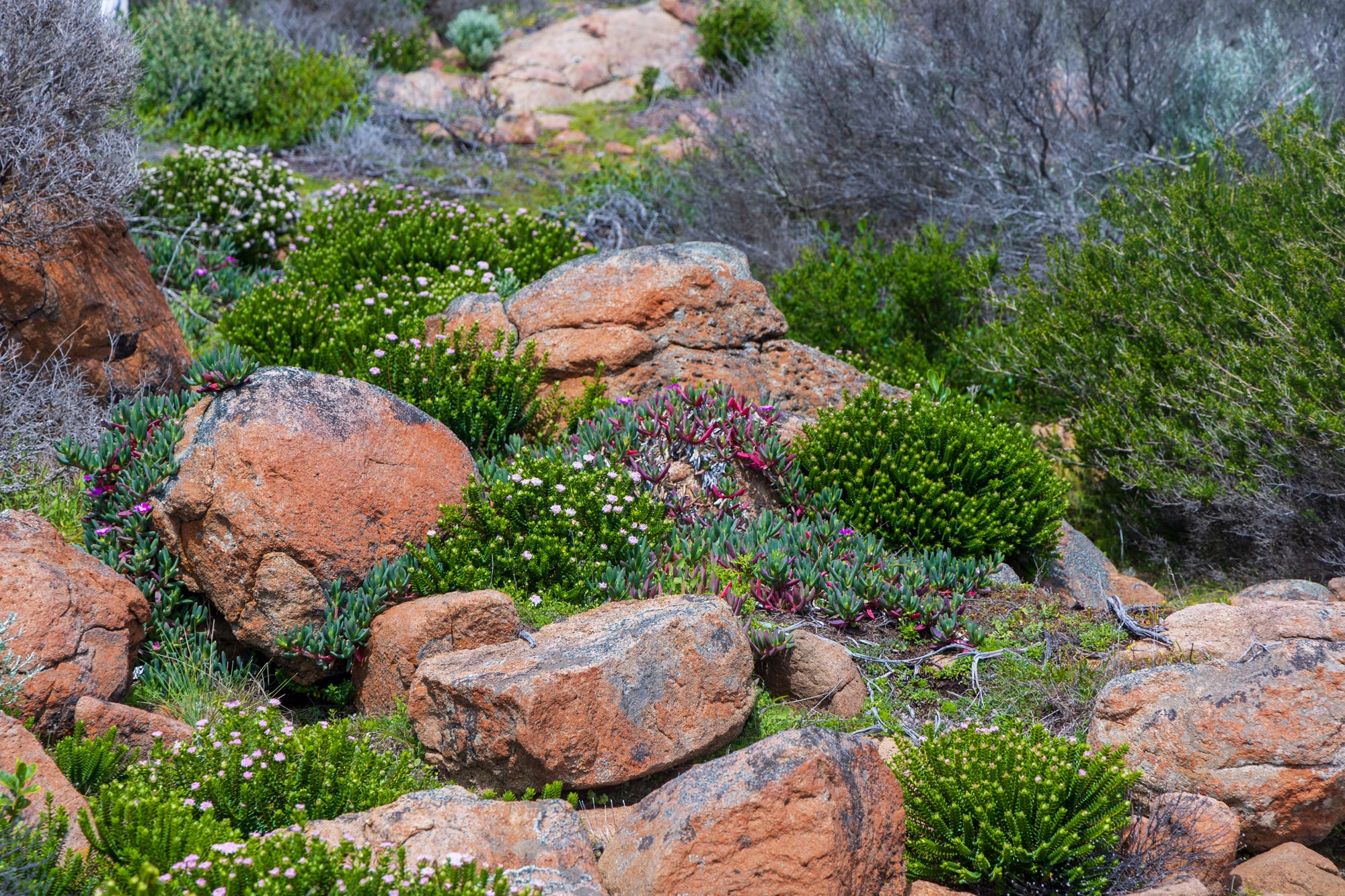
With the wildflower season in full swing, the rocky coastal scenery was softened with the warmth brought on by a band of wildflowers led by yellow hibbertia, pink pimelea, and brilliant purple pigface (I of course looked all these up through Google image search - my flower vocabulary is otherwise limited to two words: rose and dandelion).
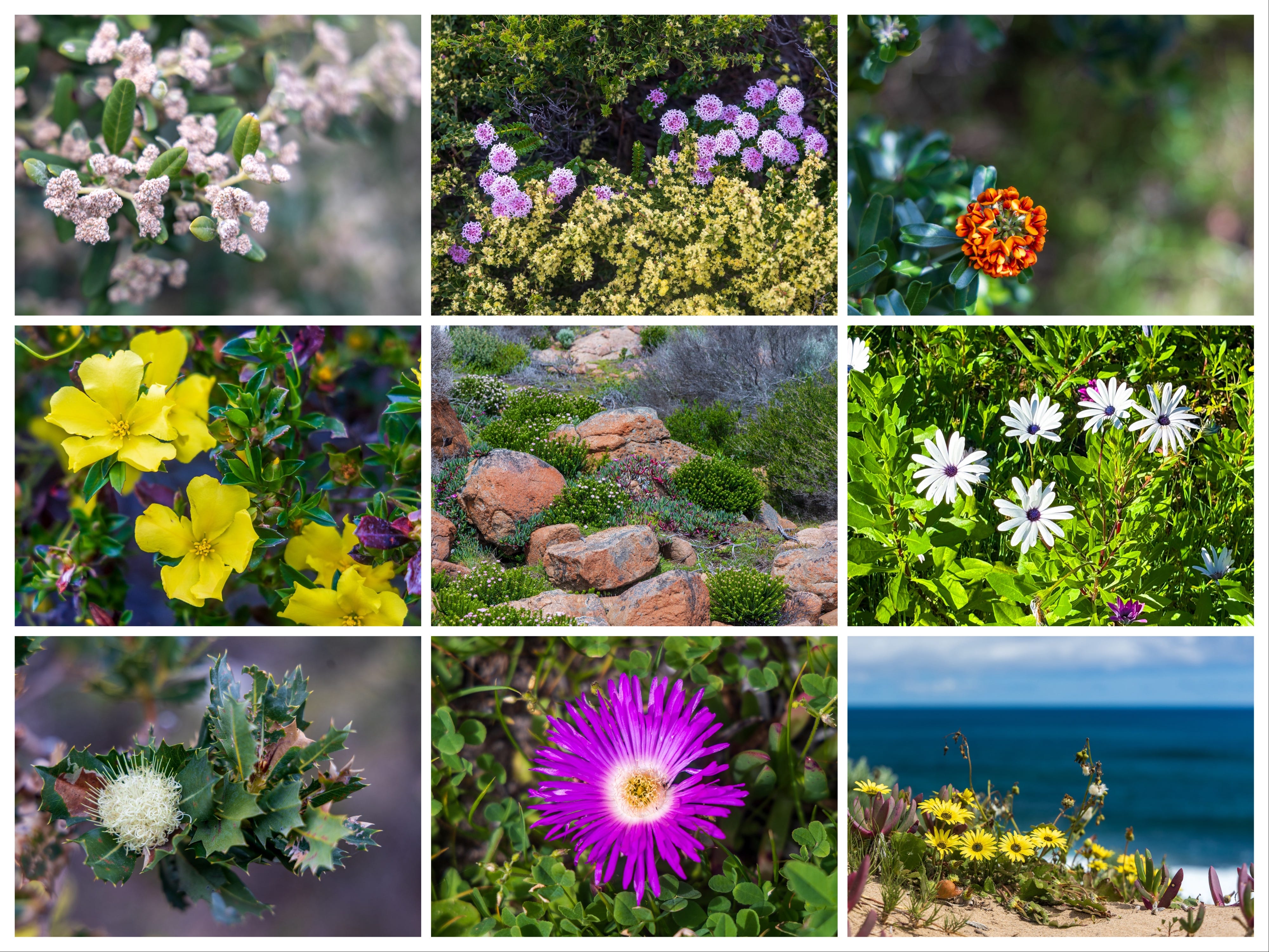
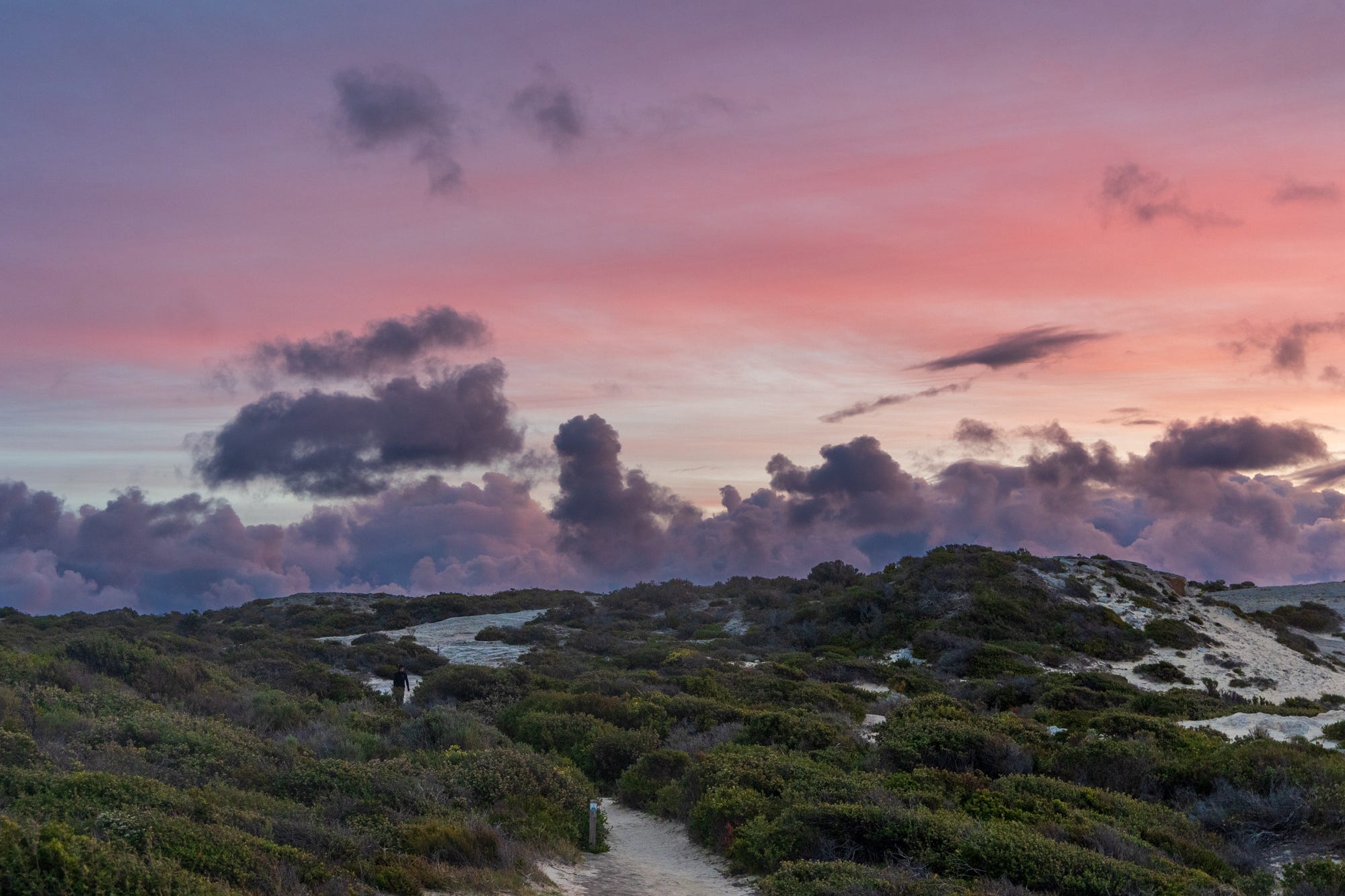
At times, the experience felt like walking through a botanic park, albeit an intentionally wildly curated one, with dense displays of flowers on both sides of the narrow trail. But the most exciting moments came when those flowers, in the most saturated colors possible, popped up unexpectedly along the sand dunes or between giant rocks, adding a welcome contrast to sections of the trail that strangely felt desert-like, despite the ocean’s constant presence.
Unlike the Great Ocean Walk, where the trail ends in an absolute visual crescendo with the 12 Apostles, the Cape to Cape Trail doesn’t have an equally defining landmark, one that would warrant a trip on its own even in the absence of the walk.
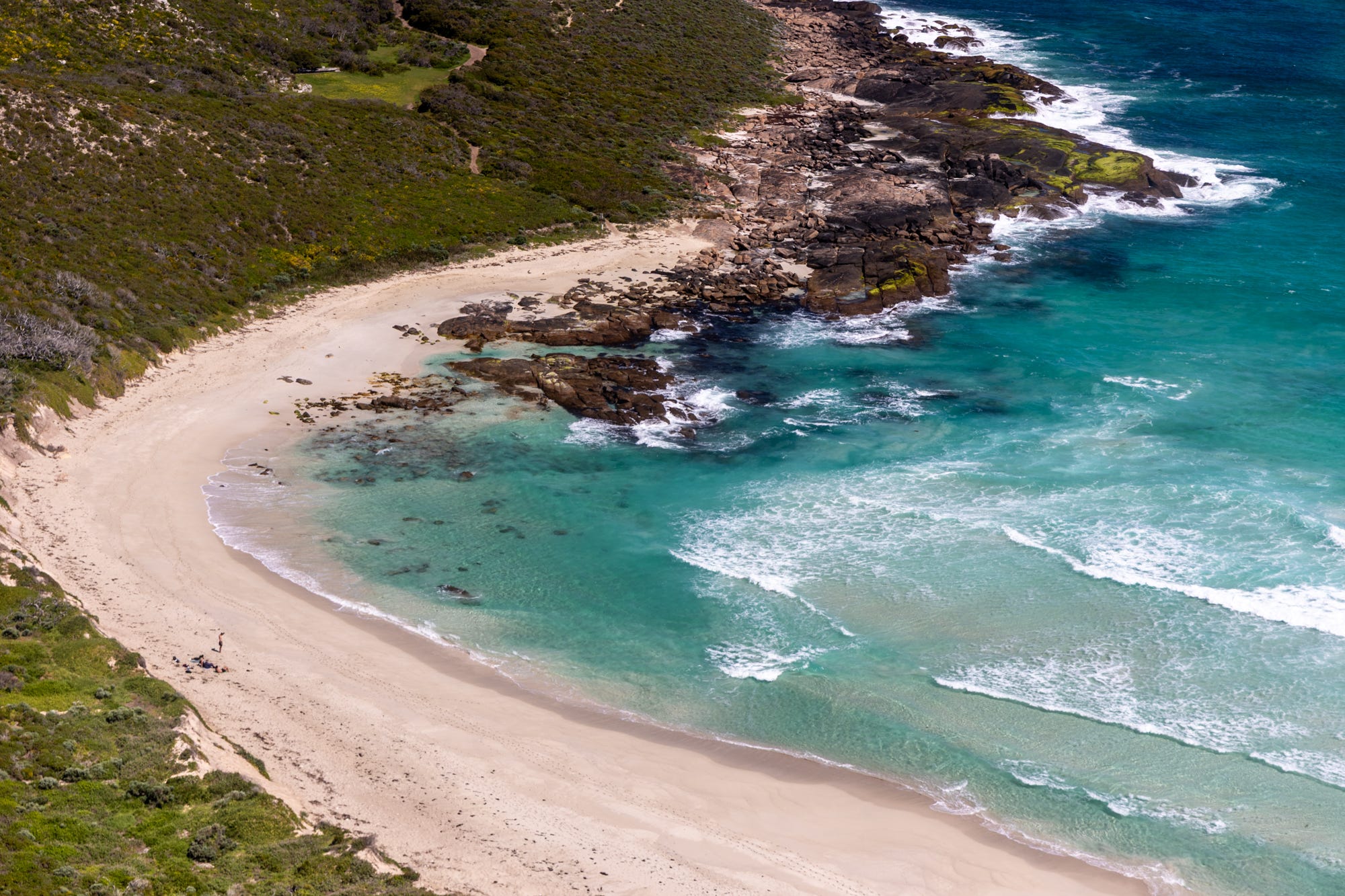
But the trail is certainly not worse off because of it. Instead, its diverse range of terrain and scenery keeps you visually captivated throughout, offering microdoses of awe at almost every turn, rather than giving you one big scene to aim for. I don’t think I had ever stopped so many times to take photos during a hike before - to the point of making me worried about my timing and water reserves.
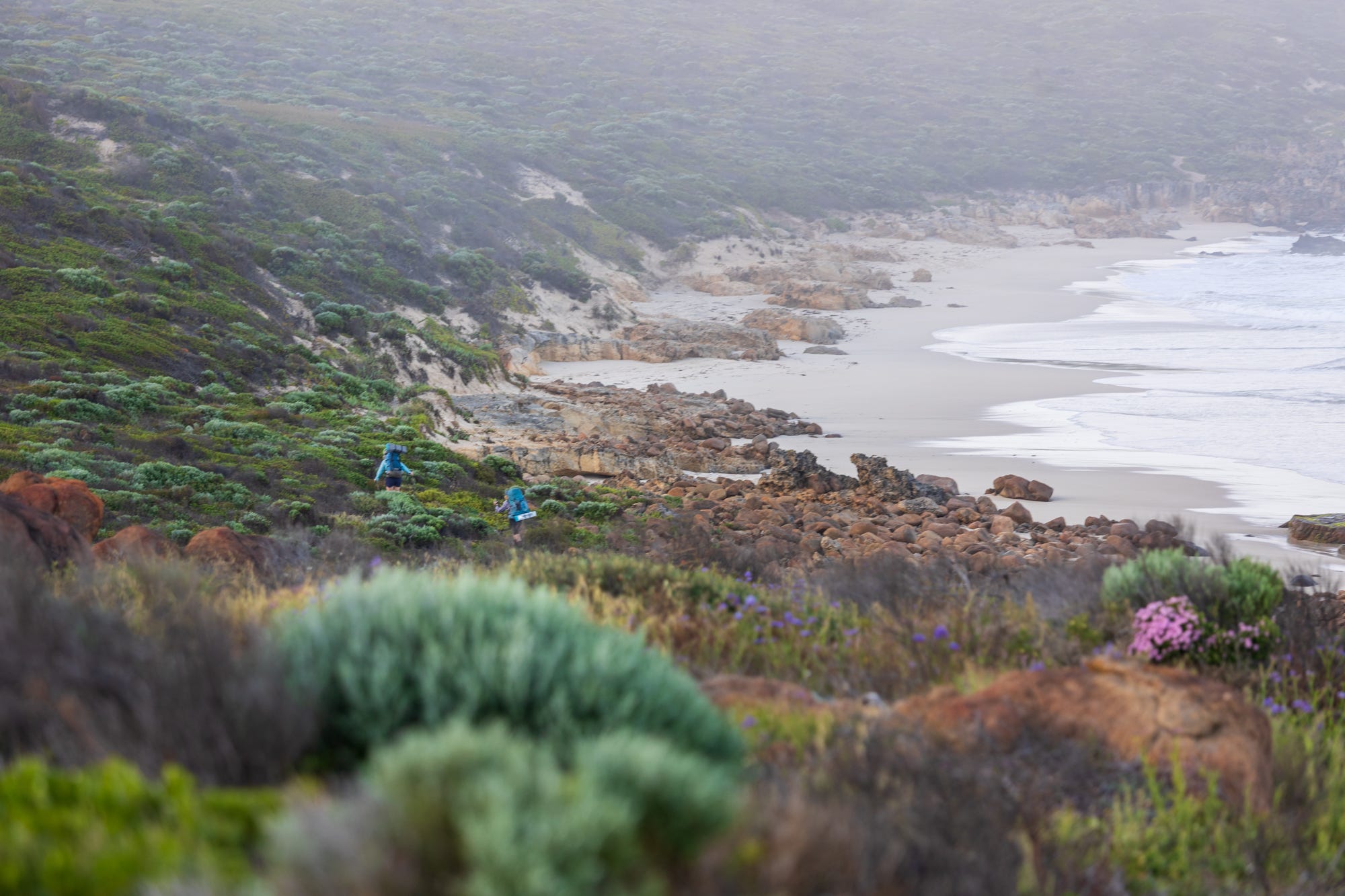
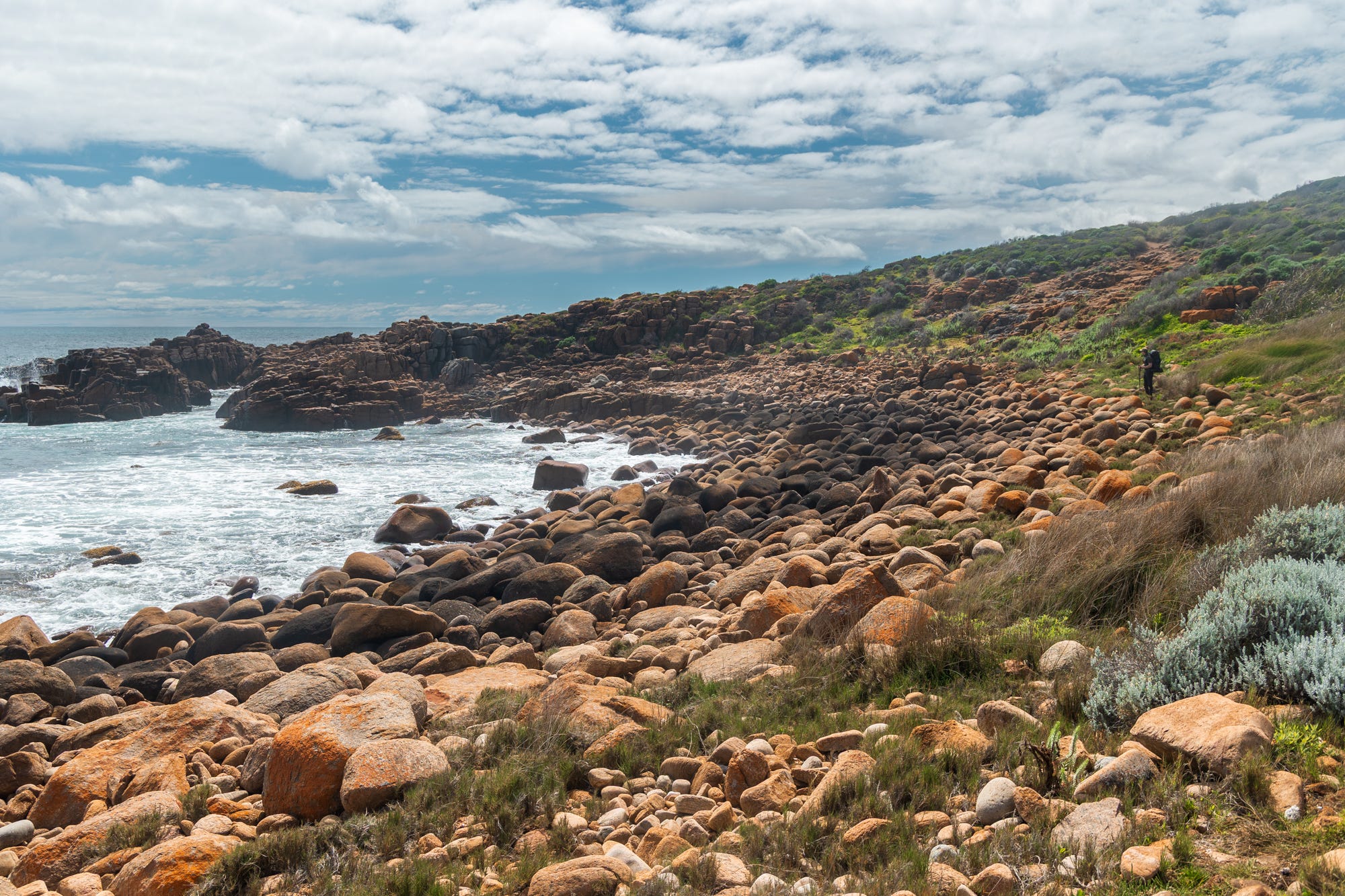
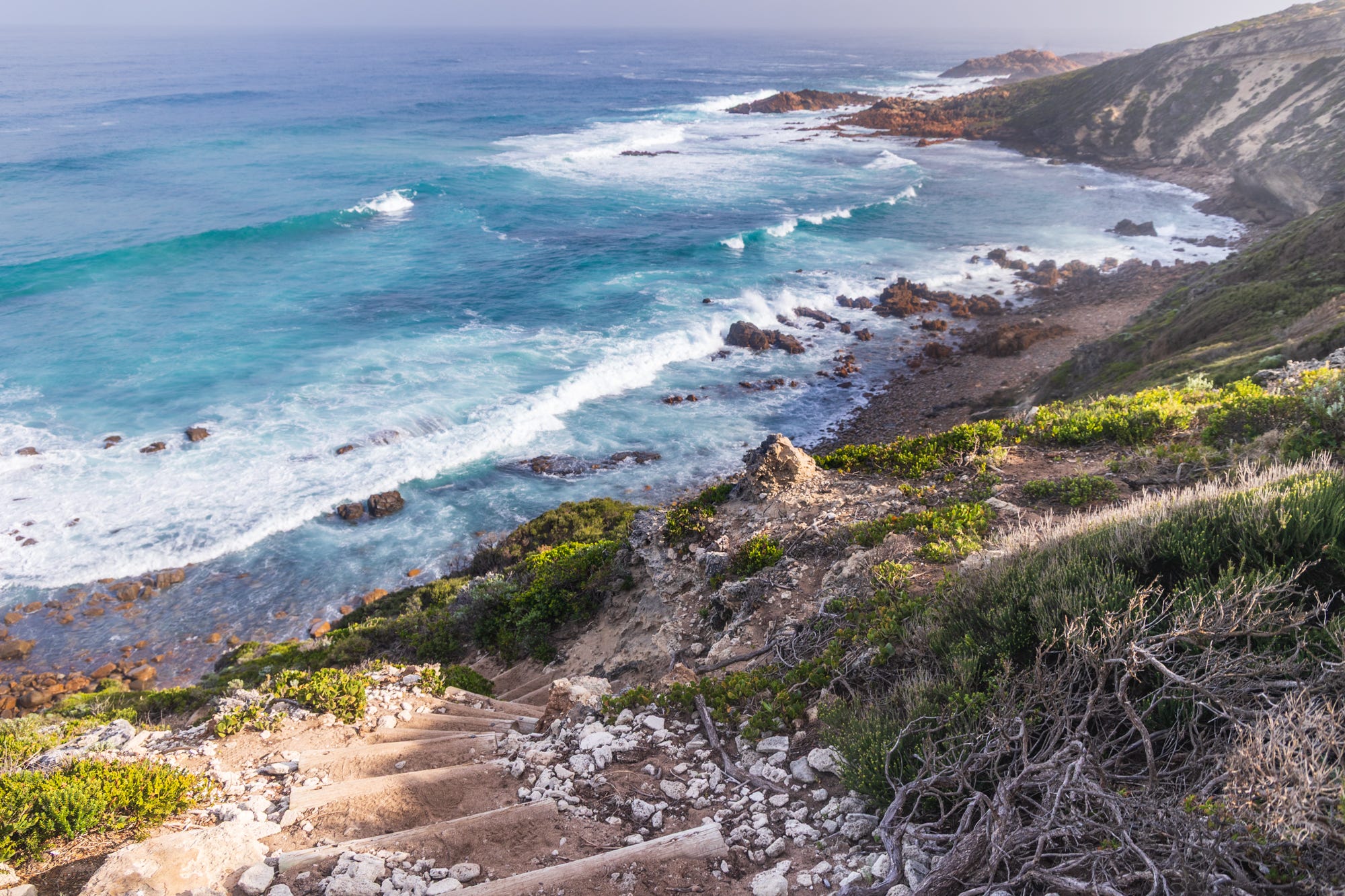
One moment you are walking on a wooden platform in a very misleading “this is a walk in the park” mode, only to find yourself negotiating sand dunes a few minutes later, often immediately before or after one of the notoriously long beach-walking sections, with some mild rock scrambling thrown in, because why not.
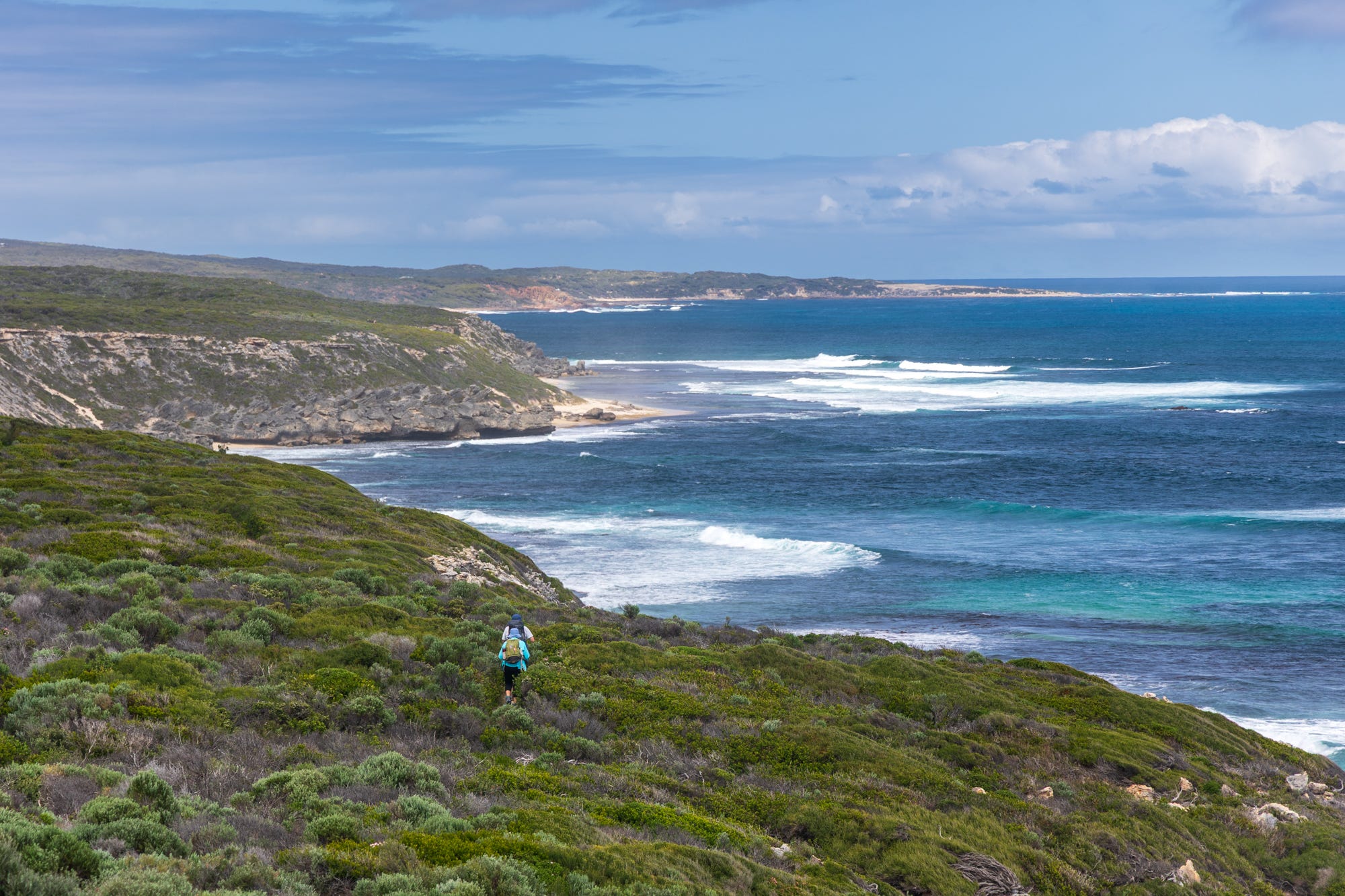
The trail also delivers on everything one might expect from a classically beautiful coastal hike: the clifftop scenery, ridge walks, endless beaches, with the constant roar of the ocean on one side - all that grandeur that reinforces the delightful feeling of remoteness that Oceania always carries, making this part of the world, for me, a rather addictive destination.
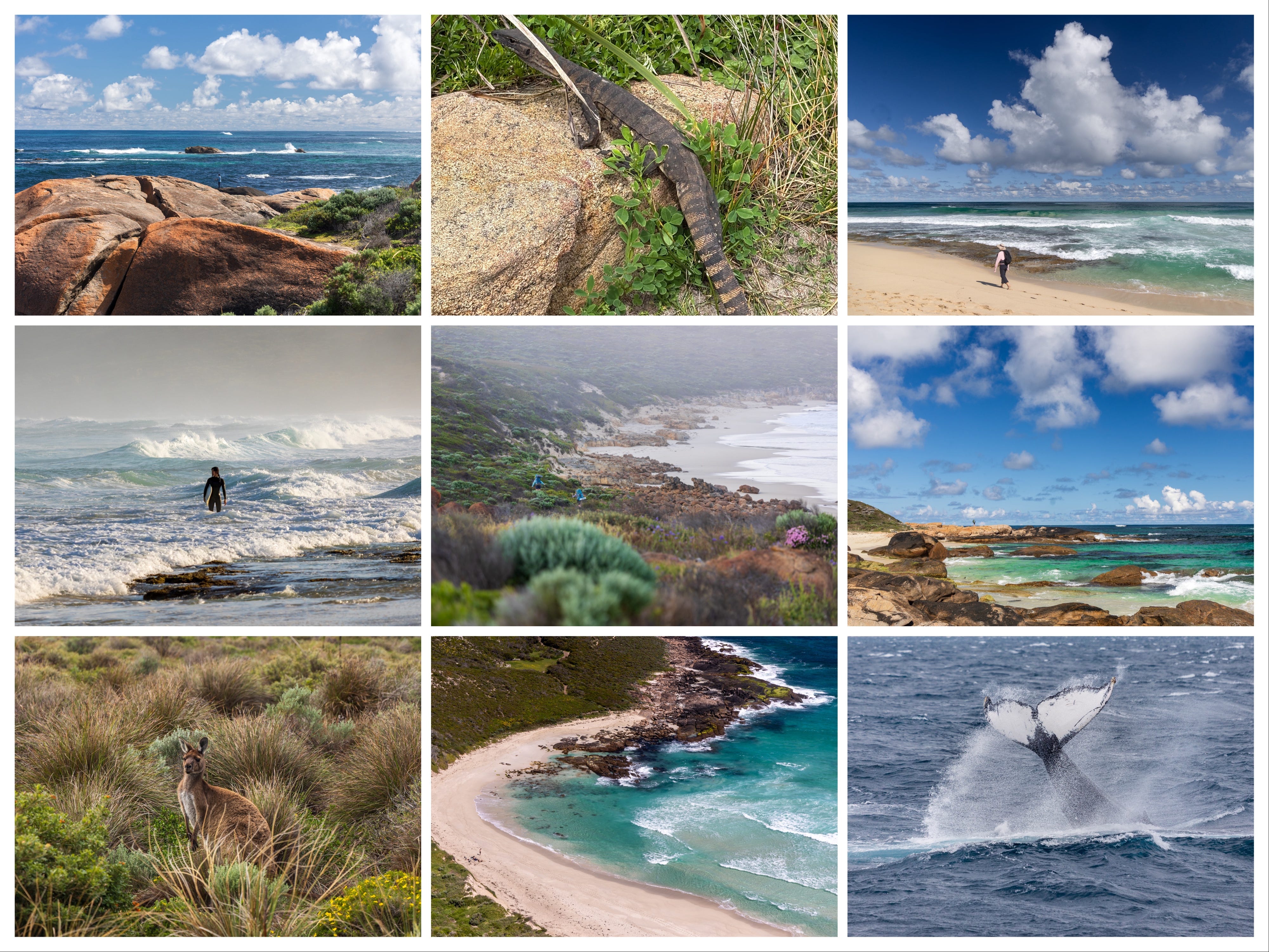
But on top of that, it offers many more intimate moments: a lone fisherman, early-morning swimmers, corridors of peppermint trees (yes, once again, Google image search), all those wildflowers, and an abundance of wildlife.
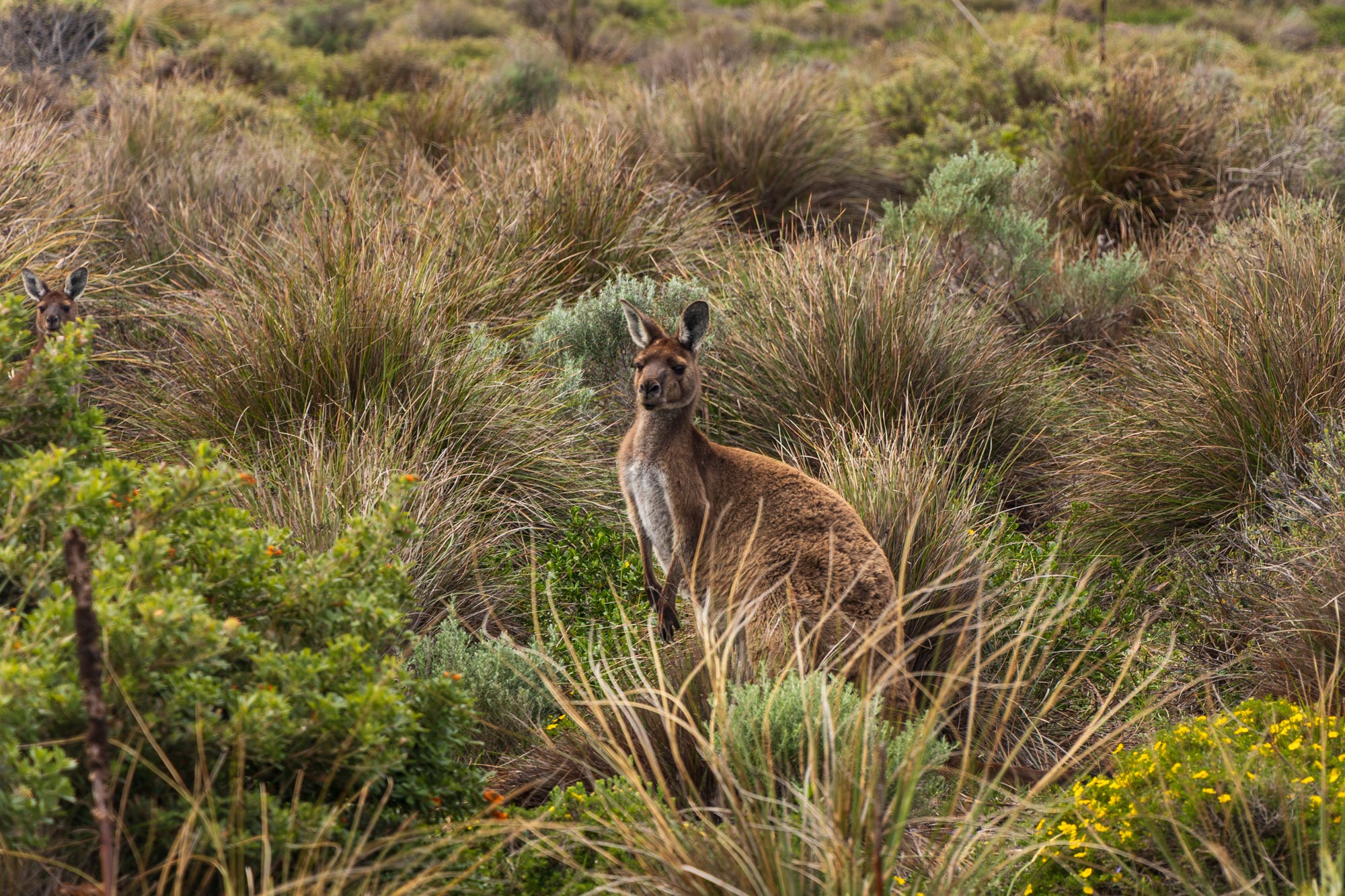
I fortunately did not encounter any snakes, despite it being their active season, but many reptiles, with an admirably cool attitude in sharp contrast to mine at the moment of encounter, made up for their absence, along with the adorable kangaroos that seemed to favor group strolls rather than solo walks.
But the beauty and variety were not the only aspects of the hike that I underestimated before the trip - the trail, in a very humbling way, turned out to be more demanding than I thought it would be.
While it was much milder than the Great Ocean Walk in terms of elevation changes, with only a few very short steep climbs or descents, the beach-walking sections it throws at you at regular intervals felt more challenging than most steep climbs and made the whole experience much harder for me.
On those long beach sections that I was warned about before the hike but avoided worrying about until I actually walked them, I was constantly switching between two extreme mental states.
The first is that euphoric feeling of thinking you are right there, in that exact moment, experiencing one of the best moments of your life.
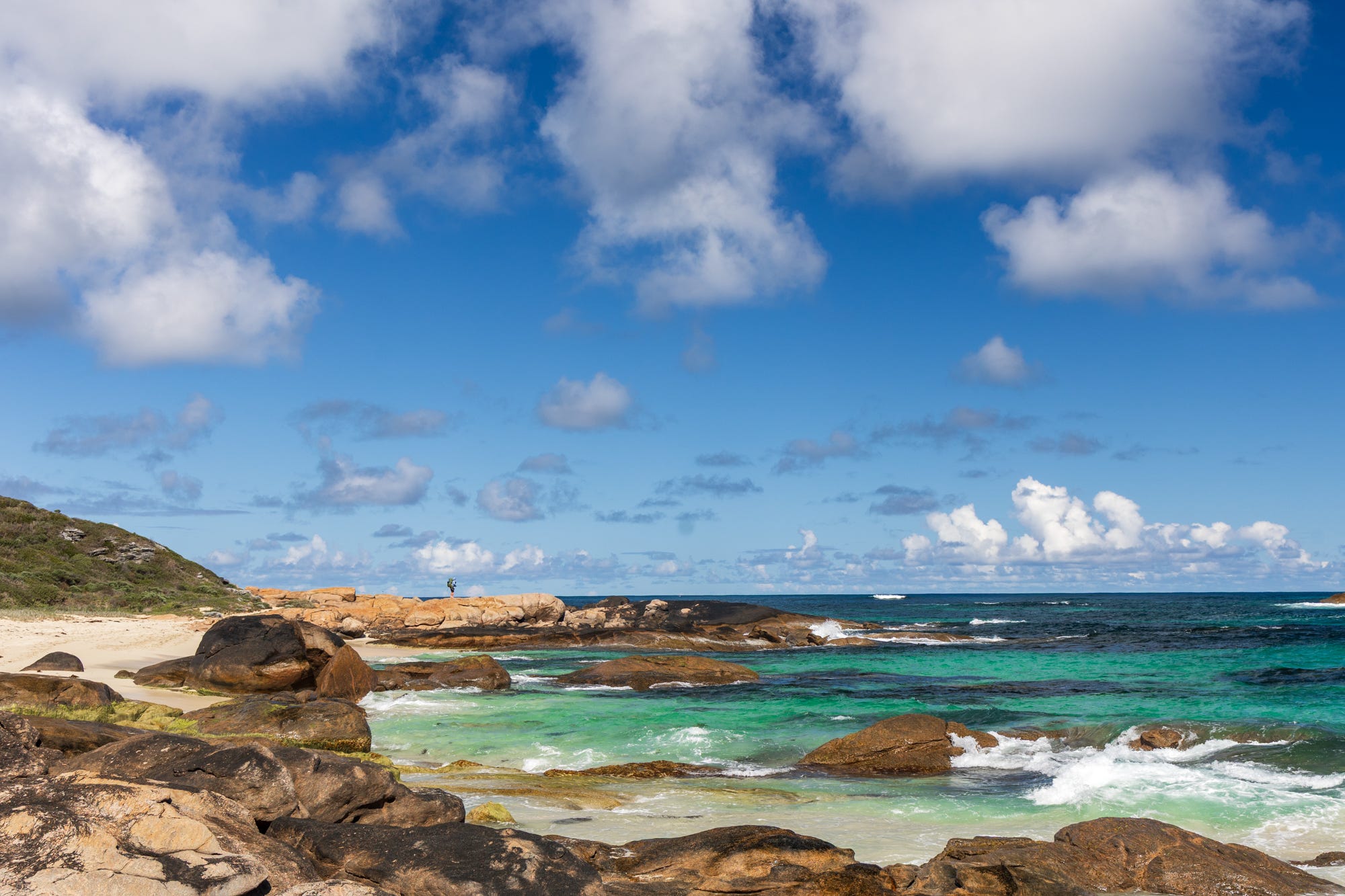
You have the mesmerizing ocean on one side, washing your feet, and sometimes your whole body (no complaints here), displaying all the possible tones of blue; birds flying above under the giant clouds; some mysteriously hazy view ahead of you - could be birds, could be people, could be rocks - all bringing that explosive joy that makes this whole act of living worthwhile, and may make some mildly troubled minds (not saying who) question what they did in this life to deserve to witness that level of beauty.
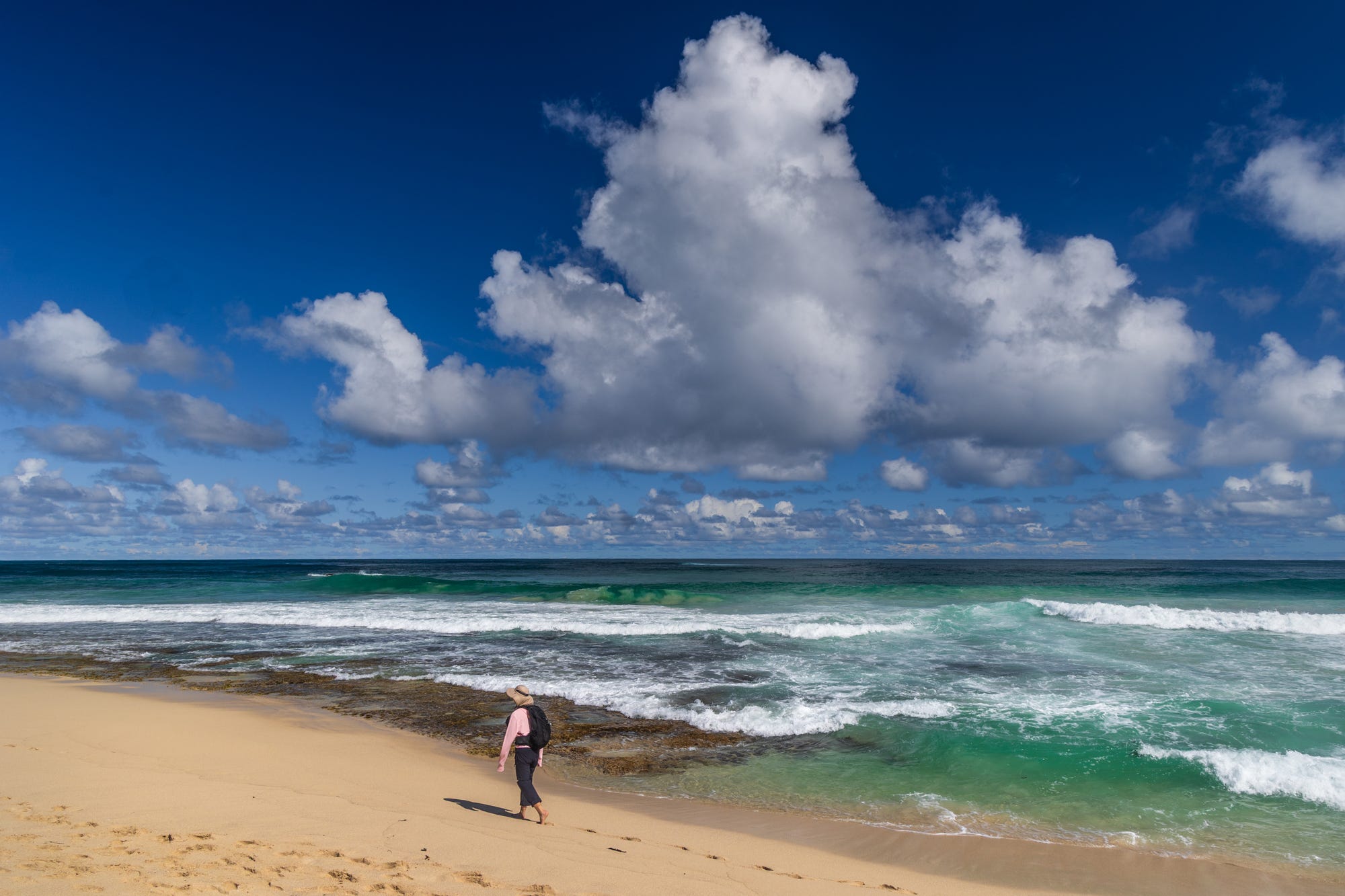
But those moments were immediately followed by bouts of despair. The kind that made me question my sanity for spending all that money, flying ten hours one way, and committing to this entirely voluntary activity during my week off - the activity, in that specific moment, being the act of sinking deeper into the soft sand with a 15-kg pack on my back, with no end in sight, the burning sun above with just a hat protecting me from all of that (poor outfit choice that Japanese hikers would certainly disapprove of), while wondering whether carrying only three liters of water was the worst decision of my life.
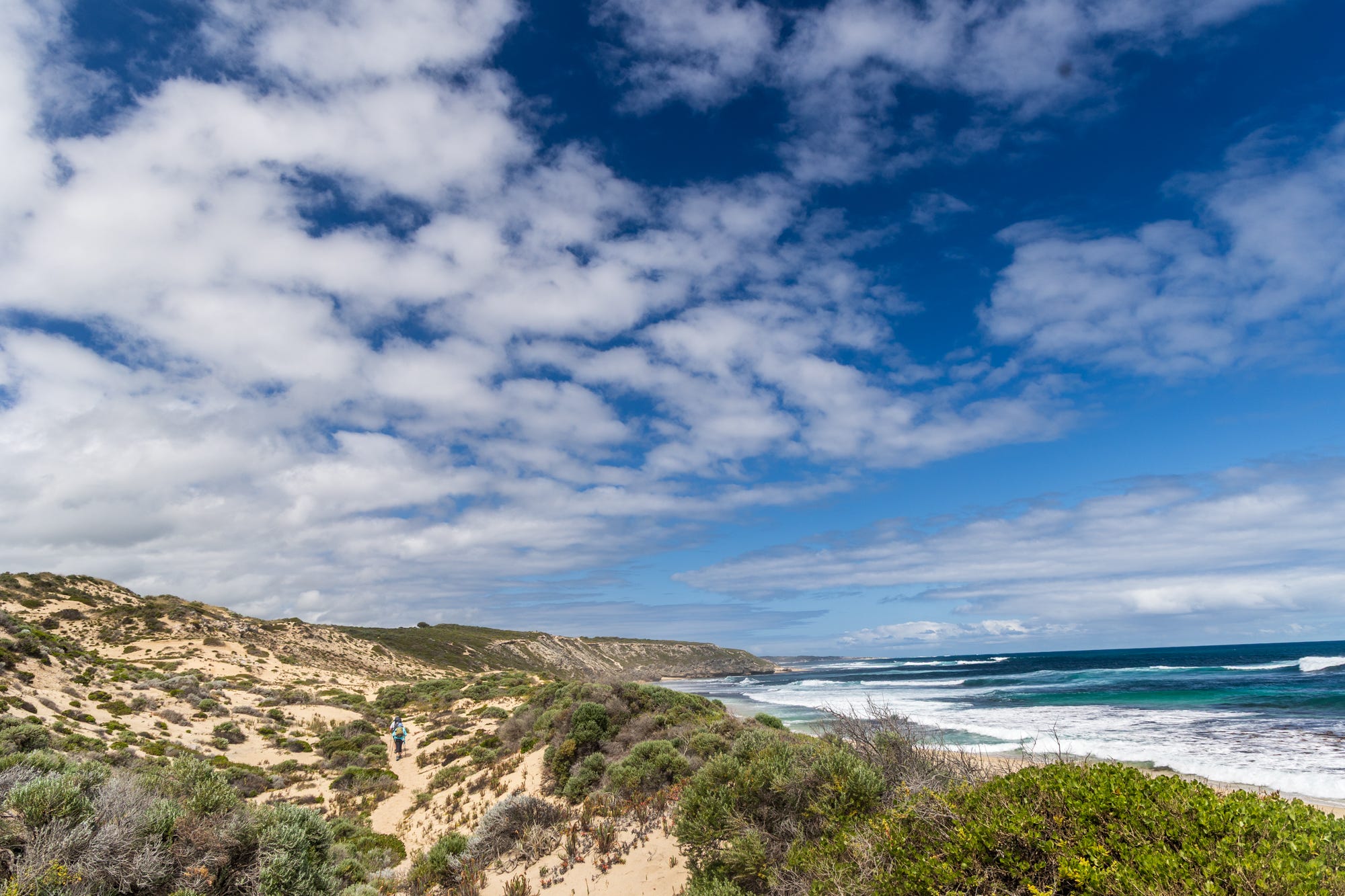
Like most things in life, those moments of despair would pass too, at the first sight of rocky terrain ahead, promising some firm ground at least for a little while.
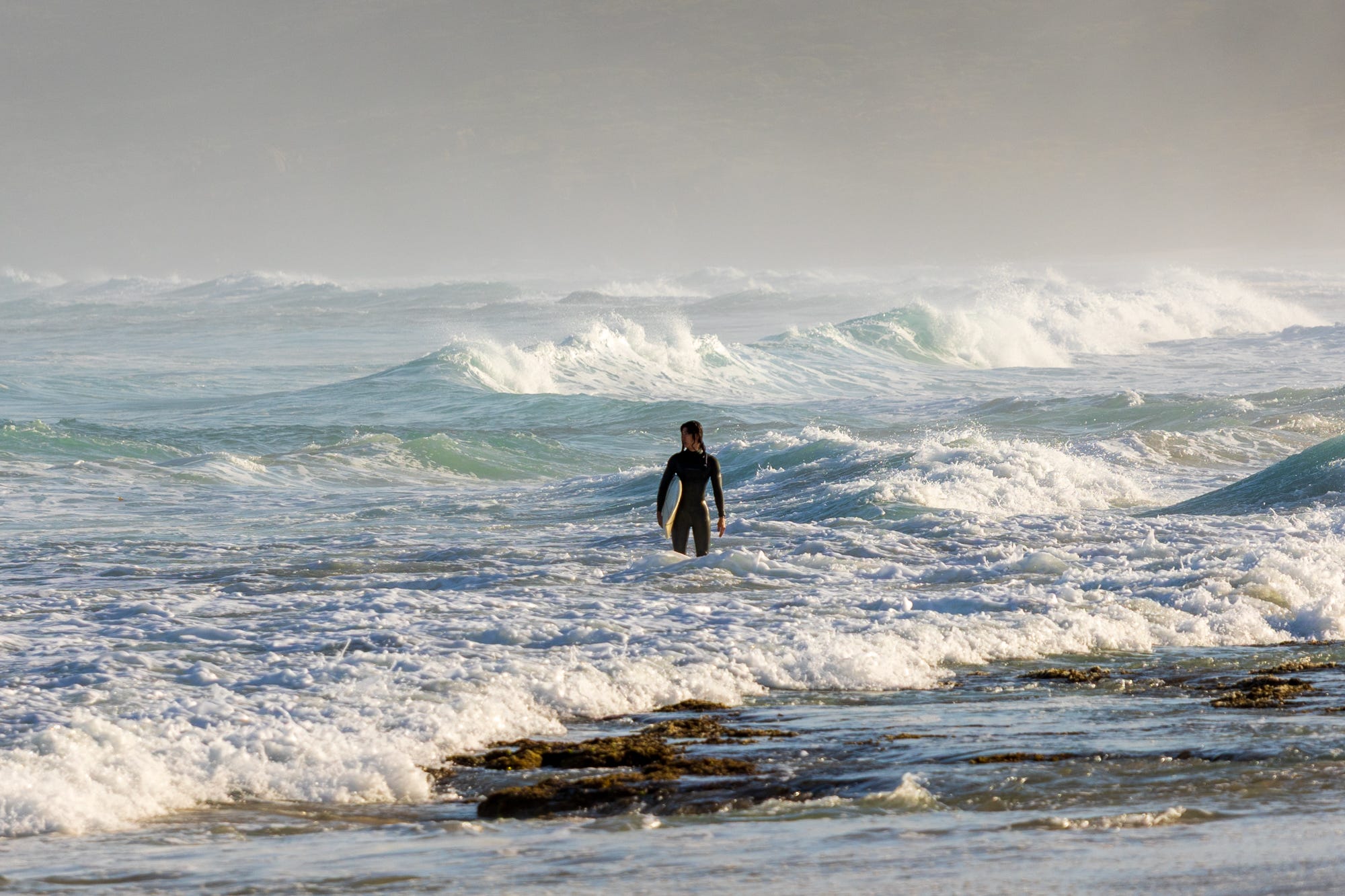
Then I’d often see surfers braving the shark-infested waters (with warning signs at every corner), as if to make sure I didn’t forget I was in Australia, and I’d get hypnotized for a while watching their dance with the water, temporarily forgetting the beach sections and all my self-inflicted troubles.
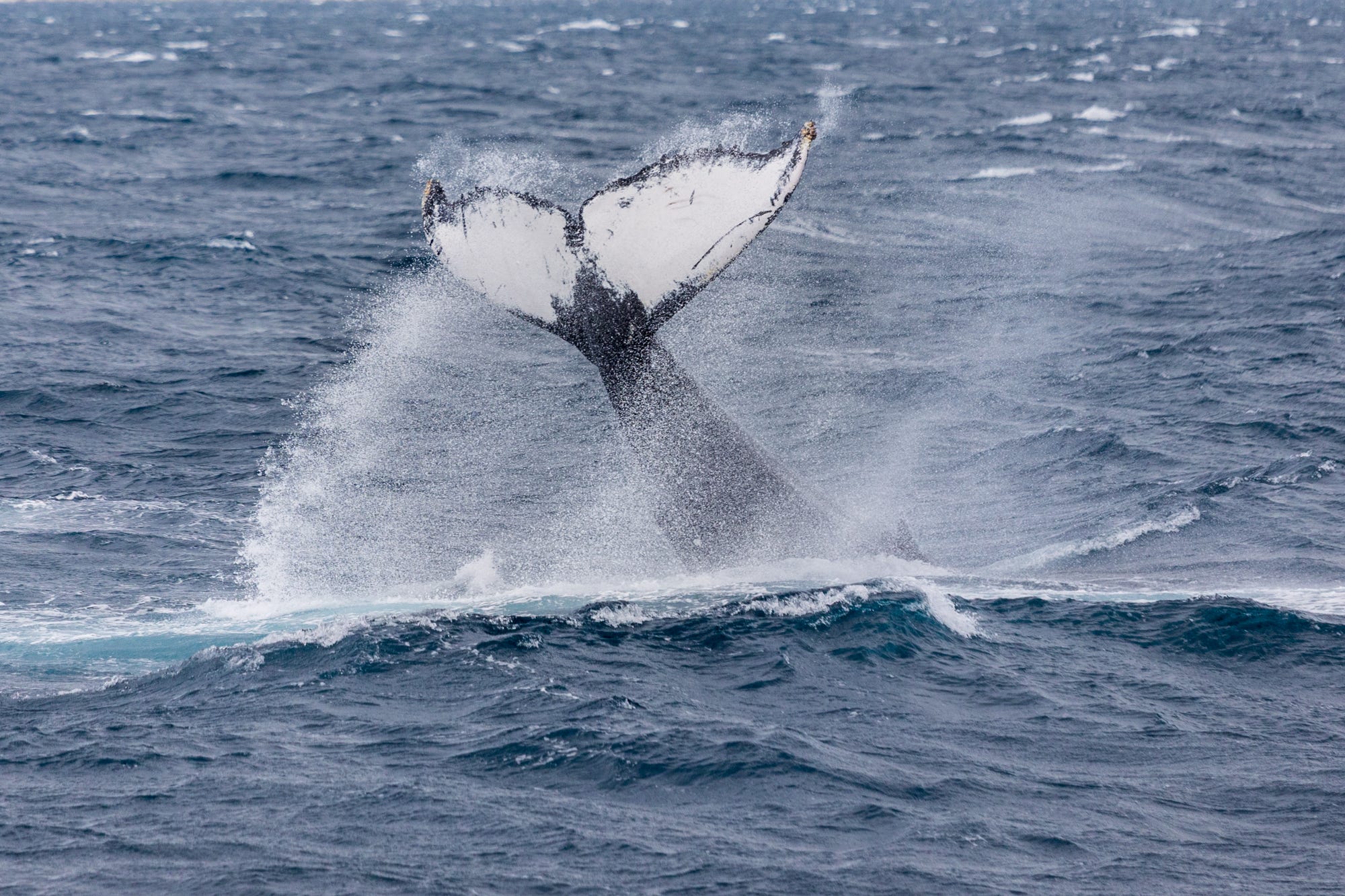
And then there were moments that could qualify as the ultimate visual crescendo of a coastal hike (even more so than the 12 Apostles) - like spotting a group of humpback whales out in the ocean during their seasonal migration, some of them fully breaching2 - which would immediately send me back to that other euphoric extreme, making me think that this was, after all, a very well-timed, perfectly planned trip, and that maybe I deserved some of that beauty.
Before the trip, I read one comment that kind of worried me: the Cape to Cape was a nice trail, but definitely not one that deserved an overseas trip. But that worry disappeared within a few moments of stepping onto the trail - perhaps evidence of how easy I am to please (as my mother always says, I suspect not always in a flattering way), of my desire to justify all the financial and physical effort behind the trip, or simply of how spectacular the trail actually was.
Now, a few weeks after the hike, back in Tokyo at four in the morning, editing this letter and going through the photos that never really do justice to the experience, I am still wondering whether those beach sections were actually that hard or if I was perhaps being a little dramatic - possibly a little bit of both. But fueled by my third cup of coffee of the morning, I am confident that the Cape to Cape was worth the trip overseas.
As always, thank you for being here. I will be back in a few weeks with the October letter, which will return not to mine but to the motherland of this newsletter.
Until then,
Burcu
P.S. As noted in last month’s letter, I have changed how the newsletter archive works as Google’s AI-generated search results increasingly eat away at the traffic that once found its way to websites and newsletters like mine, while making use of the content they find there. Each monthly letter now stays freely available on the web until the next one arrives (and perpetually in your inbox), after which it moves into the paid archive. The more general web posts, Japan travel resources, and other content on my separate website remain public as before. I explained the reasoning behind the change and the new setup in a little more detail here: Letters from Japan Archive.
Due to limited time, one poorly timed rest day, and my desire to spend at least some time enjoying lovely Margaret River, where I based myself for the hike, I didn’t walk the entire trail. I covered the sections from Cape Naturaliste to Yallingup, Yallingup to Moses Rock, Moses Rock to Gracetown, and Prevelly to Contos Beach (my favorite section). I will soon write a separate post for my website in more of a trail-notes format, with practical planning information. But I still, even here, need to mention Bianchi from Oak Drive, who drove me to and from the trail every day and made the whole rather complicated business of hiking different sections while staying in Margaret River remarkably easy. They were wonderfully flexible with pickup times and locations, which meant I could concentrate on the walking rather than constantly worrying about how I was going to get back at the end of the day. And to Dunsborough Taxis, who got me to the beginning of the hike at Cape Naturaliste from Busselton and helped me save a few precious hours right on the first day - with the convenience of being able to book online and easy email communication.
While I spotted many whales during the hike, I took the photo below during a boat trip that I joined after the hike.
Sounds like a fantastic trip.
Thanks for sharing! We had this on our itinerary but ran out of time in Australia, though the Great Ocean Walk was incredible. We will definitely get to enjoy this trek in the near future. We arrive in Hokkaido in two days for a couple weeks before heading south. We hope to check off some of your recommendations before our 90 days is up.